
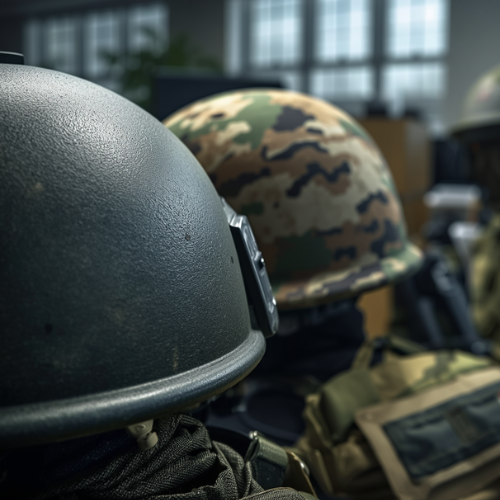
A Soldier’s Guide to Insuring Issued and Personal Equipment
Why Kit Insurance Is Not Optional for Serving Soldiers
Every soldier in HM Forces carries two categories of equipment: kit that has been issued to them by the MOD, and kit they have bought themselves. Both categories carry financial risk.
The MOD does not insure your personal possessions or cover your Licence to Occupy liability.
That one sentence defines the problem this guide addresses.
UK Armed Forces personnel encounter unique risks to their personal belongings that far exceed those faced by civilians, primarily due to their demanding service lifestyle. Frequent deployments, constant transit between postings, and rigorous training exercises expose kit such as electronics, clothing, and valuables to elevated threats of theft, loss, or damage across global locations.
Standard home and contents insurance policies are not designed for service life. They do not account for military kit, the Licence to Occupy responsibility, or the fact that your possessions may be at a UK base, a foreign posting, or a deployed location all in the same year.
This guide explains what you are actually responsible for, where the gaps are, and how to close them properly.
Issued Kit: What You Are Responsible For
When the MOD issues you equipment, it is logged on your personal charge. You sign for it. That creates a financial relationship you need to understand clearly.
Service personnel have responsibility for kit issued to them, and few civilian policies handle military kit.
Permanent and temporary issue military kit on personal charge to you, as well as service uniforms, mess kit, and equipment of a military nature purchased and owned by you, can all fall within the scope of a specialist military kit policy.
That is a wide scope. It includes everything from your body armour and combat boots to your dress uniform and personal-issue rifle cleaning equipment.
Service personnel risk wage deductions for lost MOD kit, with full replacements costing thousands. Uniforms alone exceed £500 and gear can exceed £2,000, due to shared barracks, harsh exercises, and theft.
If you are found to have lost kit through negligence, you can face a formal charge under military law and a financial penalty. Insurance does not remove that disciplinary risk, but it does protect your finances if kit is lost, stolen or accidentally damaged through circumstances beyond your control.
Personally Purchased Kit: The Gap Most Soldiers Miss
A significant proportion of a soldier’s working kit is bought privately. Boots beyond the issued pair, cold-weather base layers, tactical gloves, and personal torches all come out of your own pocket. Senior ranks and officers also face the cost of mess kit and ceremonial dress, which can represent a substantial personal investment.
Your issued and purchased military clothing, equipment and ceremonial dress can both be covered for loss, theft and damage worldwide
under a specialist military kit policy. This is the crucial distinction from a civilian contents policy, which would not recognise military-pattern clothing or tactical equipment as standard insurable items.
Personal devices like laptops and phones, essential for service duties, now average £5,196 per household in 2025, a 48 per cent rise since 2019 due to premium tech inflation. Military personnel face compounded risks during deployments, where high-spec gear is vulnerable in transit or on operations.
If your laptop or smartphone is damaged or stolen on exercise or deployment, a standard travel or home policy is extremely unlikely to pay out.
Most insurers will not cover your smartphone if it is smashed on deployment.
Understanding Your Licence to Occupy Liability
If you live in Single Living Accommodation or Service Family Accommodation, you do not hold a standard tenancy agreement.
As personnel occupy Service Family Accommodation under a Service Licence to Occupy agreement, they are not classed as a tenant and, therefore, standard home insurance policies do not cover the potential liability.
The Ministry of Defence recommends, under JSP 464 Volume 1 Part 1 Section I Paragraph 0605, that you take out a specialist type of insurance that covers your liability, up to £20,000, for any damage you or your family may do to your SFA.
Without insurance, a fire, a flood from an unattended bath, or an accident that damages the building structure could leave you personally liable for a significant repair bill.
An LTO insurance policy covers damage to the building including walls, floors, bathroom ware, fitted kitchens, carpets, MOD furniture and white goods.
That is a broad and expensive list of items to fund out of your own salary.
LTO insurance also covers occupants of Single Living Accommodation for any barrack damages caused by their own negligence.
This matters to single soldiers just as much as to families in married quarters. A dropped iron, a burst pipe from a blocked drain, or a fire caused by unattended cooking equipment can all trigger a liability you had not planned for.
What a Specialist Military Kit Policy Should Cover
Not all kit insurance policies are equal. When you are comparing options, these are the areas you need to check line by line.
Issued and Temporary Kit
Service Equipment cover should include accidental loss of, accidental damage to, malicious damage to, and theft of issued kit and temporary issued kit.
Confirm the policy specifically lists issued equipment and not just personal possessions.
Worldwide Cover
Unlike a civilian policy, a military one needs to cover the additional risks worldwide.
Your kit does not stay in the UK and neither should your cover. Confirm that the policy applies whether you are in barracks, on exercise in Kenya, or deployed to a theatre of operations.
Personal Possessions and Gadgets
Smartphones, laptops, watches, cameras and personal items should all be included. Higher-value items can be listed individually on your schedule.
Always check the single-article limit. If your laptop or camera is worth more than the standard single-item cap, you need to specify it separately or you will be underinsured.
Licence to Occupy Cover
A good kit insurance policy includes £20,000 of Licence to Occupy cover as standard, whether you live alone or with your family in married quarters.
This should not be an add-on you have to remember to select. It should come built in.
Personal Liability
A comprehensive policy should cover personal liability up to £5,000,000, with cover applying worldwide and in transit.
This protects you if you are held personally responsible for injury or property damage to a third party, which is a realistic risk for any serving soldier.
How Absolute Military Kit Insurance Is Built for Service Life
Ranked number one for comprehensiveness by Fairer Finance 2026, the policy covers your military kit, personal possessions, gadgets and service accommodation both at home, on a posting, or deployed anywhere in the world.
Tiered plans run from £12,000 total cover in Level 1 to £69,000 in Level 3, enabling you to match your cover level to your actual kit value. For instance, a deployed soldier can secure £6,000 kit cover plus £20,000 LTO seamlessly in a single policy.
The policy is underwritten by a financially strong insurer.
The policy is underwritten by Hamilton Insurance DAC, a wholly owned subsidiary of Hamilton Insurance Group, incorporated in Ireland and regulated by the Central Bank of Ireland. Hamilton Insurance DAC is rated A (Excellent) by AM Best and A- by Fitch Ratings, with both ratings carrying a stable outlook as of May 2026. This is one of the highest financial strength ratings independently awarded in the insurance industry, reflecting very strong balance sheet strength and excellent claims-paying ability.
You can find out exactly which level of cover suits your situation by speaking to a Vitality and protection coach at our Vitality Coach page, or read our latest market commentary in the September 2026 Market Review.
Practical Steps: What to Do Before You Buy
- Inventory your issued kit. Write down every item on your personal charge, its approximate replacement value, and when it was last checked. This will tell you the minimum cover level you need for issued equipment.
- Value your personal kit honestly. Include boots, base layers, tactical equipment, personal electronics, and ceremonial dress. Many soldiers are surprised how quickly the total exceeds £3,000.
- Check your accommodation status. Confirm whether you are in SLA, SFA, a MOD hiring, or private rental. Each has different insurance implications, particularly for Licence to Occupy cover.
- List high-value single items separately.
Higher-value items can be listed individually on your schedule
to ensure they are covered above the standard single-article limit.
- Read the exclusions, not just the headline cover.
Standard home contents policies often fail serving personnel, with exclusions for overseas activities, unoccupied properties, or military-specific scenarios.
A specialist military policy is written to avoid exactly these gaps.
When Can You Claim on MOD Allowances Instead?
There is a MOD allowance for loss or damage to personal effects caused by the demands of service.
This allowance provides compensation when there is loss or damage to personal effects caused by the demands of military service. It is only available when compensation cannot be obtained under an existing insurance policy or from other sources.
The circumstances of any claim will be investigated by your Commanding Officer before approval can be given for payment. If a claim is approved, the amount of compensation will be assessed on the reasonable cost of replacing the article in question with a new one.
You must submit your claim to your Commanding Officer within one month of the date of the incident, using JPA Form 014.
This MOD route has significant limitations. It requires Commanding Officer approval, it does not apply where insurance could have covered the loss, and it excludes losses due to carelessness. It is not a substitute for proper kit insurance. It is a last resort.
Frequently Asked Questions
Does the MOD insure my personal kit if it is lost or stolen on deployment?
The MOD does not insure your personal possessions or cover your Licence to Occupy liability.
There is a limited MOD allowance for loss caused by the demands of service, but it is only available where insurance is not in place and requires Commanding Officer approval. It cannot be relied upon as a primary financial safety net.
Do I need kit insurance if I live in single living accommodation rather than married quarters?
Yes.
LTO insurance covers occupants of Single Living Accommodation for any barrack damages caused by their own negligence.
Beyond the Licence to Occupy liability, you still need cover for your personal possessions and issued equipment. Single soldiers are just as exposed to kit theft, loss and accidental damage as those in family accommodation.
Will a standard home contents policy cover my military kit on deployment?
Standard home contents policies often fail serving personnel, with exclusions for overseas activities, unoccupied properties, or military-specific scenarios.
Most insurers will not cover your smartphone if it is smashed on deployment.
A specialist military kit policy is specifically written to cover your possessions wherever service takes you, including hostile environments and transit between locations.
What is the maximum I could be liable for as a Licence to Occupy holder?
The Ministry of Defence recommends you take out specialist insurance that covers your liability, up to £20,000, for any damage you or your family may do to your SFA.
This covers damage to the building including walls, floors, bathroom ware, fitted kitchens, carpets, MOD furniture and white goods.
Without insurance, you would be personally responsible for repair costs up to that limit.
How do I know what level of kit insurance to choose?
Start by adding up the replacement value of your issued kit, your personally purchased military equipment, and your personal electronics and valuables.
Tiered plans run from £12,000 total cover in Level 1 to £69,000 in Level 3, enabling customisation for individual needs.
If you are unsure, speak to an adviser who can help you match a cover level to your actual situation, or read the latest market data in the September 2026 Market Review.