
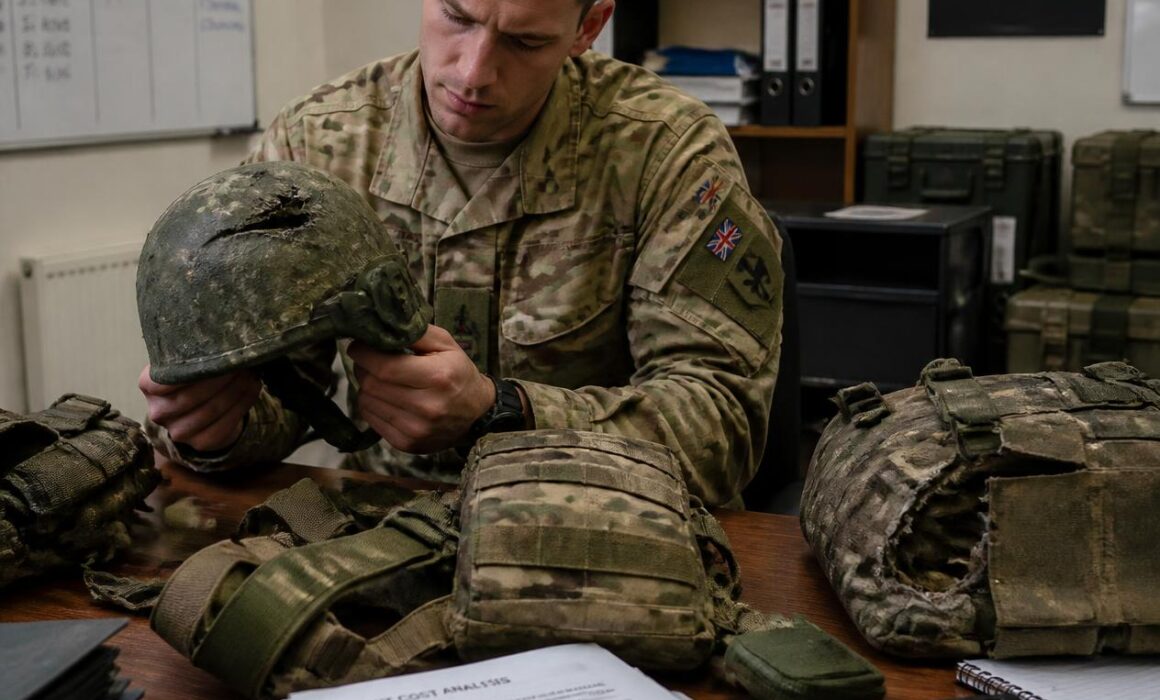
Barrack-Room Theft: Protecting Your Gear and Your Wallet
The Problem Nobody Talks About Openly
Theft in military accommodation is not a new problem, and it is not a rare one. It can happen in training establishments, in single living accommodation blocks, in transit billets, and during rear party periods when units are on operations. The result is that serving personnel can lose hundreds or thousands of pounds worth of personal property and issued kit each year, often with no financial protection in place.
The MOD provides approximately 100,000 single living bedspaces in the UK, usually in accommodation blocks inside military bases, used by single or unaccompanied personnel.
Over three-quarters of all regular personnel live in service accommodation during the working week.
That is a very large number of people sharing communal spaces, shared corridors, and open-access areas where opportunistic theft can and does occur.
This article sets out clearly what the risks are, what practical steps you can take to reduce them, and why specialist kit insurance is the financial safety net that every serving person needs to have in place.
Who Steals, and How It Happens
Barrack-room theft is almost always opportunistic. It does not require a criminal mastermind. It requires an unlocked room, an unattended room during a duty weekend, or a trust placed in someone it should not have been placed in. The range of people with access to accommodation blocks is wider than most personnel realise: fellow service personnel, cleaning contractors, maintenance contractors, rear party personnel from other units, and in some cases civilians accompanying personnel into the block.
Living in communal barracks or Single Living Accommodation heightens exposure to fire from electrical faults, floods from burst pipes, and accidental damage in shared spaces.
Opportunistic theft sits alongside those physical risks as a genuine and ongoing threat to personal property.
The items taken are predictable. Smartphones, laptops, gaming consoles, smartwatches, high-quality headphones, cash, and military kit that can be sold or reused are the primary targets.
Thief-attractive items include smartphones, smartwatches, earbuds, headphones, tablets, laptops, cameras, watches, audio-visual equipment and games consoles.
These are precisely the items most commonly found in a barrack room in 2026.
The Financial Exposure Is Bigger Than You Think
Most serving personnel underestimate the total value of property they keep in their room. Add up a smartphone, a laptop, a quality watch, a gaming setup, civilian clothing, and personal military kit that is not on direct issue, and the figure runs into several thousand pounds. Now add the issued kit on your personal charge.
When the MOD issues you equipment, it is logged on your personal charge. You sign for it. That creates a financial relationship you need to understand clearly.
Service personnel risk wage deductions for lost MOD kit, with full replacements costing thousands. Uniforms alone exceed £500 and gear can exceed £2,000, due to shared barracks, harsh exercises, and theft.
Add in a set of boots, personal protective equipment and mess kit and the total value on personal charge to a typical soldier or sailor is well into four figures.
If that kit is stolen from your room, the MOD does not automatically absorb the cost.
The MOD may cover kit lost in specific operational circumstances, but it does not act as your insurer. If kit is lost, stolen or damaged and the loss is put down to personal negligence, the liability can land on you.
Financial penalties for lost issued kit are governed by JSP 752, the tri-service MOD document that sets out expenses, compensation and allowances.
Charges are deducted from wages, with a cap based on individual earnings.
That cap does not make the deduction painless. Losing several hundred pounds from your monthly pay because of a theft you did not prevent robustly enough is a real outcome for real people.
Practical Steps to Reduce Your Risk
Prevention comes first. Insurance is the financial backstop, not the substitute for basic security discipline. There are straightforward steps that every person in single living accommodation should take.
Lock your room every time you leave it
This sounds obvious. It is also the most commonly skipped step.
To prevent items from being stolen, soldiers must ensure that their barracks room door is secured at all times when left unattended.
Locking up when you go to the cookhouse for ten minutes is just as important as locking up when you go home for the weekend.
Use your wall locker for high-value items
Keep room doors locked when not in use. In shared rooms, secure your side of the room or store valuables in a locked closet or wall locker. These measures are critical to the security of personal and issued property.
A padlock on your locker adds a second barrier that many opportunistic thieves will not bother to overcome when easier targets exist nearby.
Do not leave cash or valuables visible
Cash left on a desk or a charging phone left in plain sight in an unlocked room is an invitation.
A small safe or lockbox for your ID, cash, passport, and anything valuable is a sensible investment. Do not leave valuables unprotected in shared spaces.
A compact combination lockbox costs very little and removes the easy opportunity.
Be careful about who you allow into your room
Access control in accommodation blocks is imperfect. Maintenance and cleaning contractors may enter rooms, sometimes unaccompanied.
All breaches of security are taken very seriously. MOD policy requires all breaches to be reported regardless of whether there is firm evidence of loss or just an inability to account for some items.
Know who has been in your room and report any concern to the duty NCO immediately.
Record the serial numbers of your electronics
Before anything is stolen, photograph your devices and record their serial numbers. Store that information somewhere other than in the room itself. If a theft does occur, a police report with serial numbers gives military police and civilian police a usable lead. It also puts you in a strong position when making an insurance claim.
Do not advertise your kit
Social media posts showing a new gaming setup, an expensive watch, or high-end audio equipment tell people exactly what is in your room. Keep it quiet. The same applies to conversations in shared areas.
Why Standard Home Insurance Will Not Help You
If you have a civilian home contents policy, you may believe your property in barracks is covered. In almost every case, it is not.
Standard home and contents insurance policies are not designed for service life. They do not account for military kit, the Licence to Occupy responsibility, or the fact that your possessions may be at a UK base, a foreign posting, or a deployed location all in the same year.
Civilian policies also do not recognise military-pattern clothing or tactical equipment as insurable items in the standard sense.
Your issued and purchased military clothing, equipment and ceremonial dress can be covered for loss, theft and damage worldwide under a specialist military kit policy. This is the crucial distinction from a civilian contents policy, which would not recognise military-pattern clothing or tactical equipment.
What Specialist Kit Insurance Actually Covers
Absolute Military’s kit insurance, rated number one by Fairer Finance, is underwritten by Hamilton via Healix and is backed by an A-rated insurer. It is designed specifically around the financial risks of service life, including barrack-room theft.
The policy covers military kit (issued and purchased), personal possessions and gadgets, home contents, accidental damage to service accommodation under the Licence to Occupy (up to £20,000 as standard), and personal liability up to £5,000,000. There are various options and limits available to you.
Your issued and purchased military clothing, equipment and ceremonial dress are both covered for loss, theft and damage worldwide.
This includes issued uniform and clothing, military boots and webbing, body armour and helmets, bergens, daysacks and pouches, ceremonial dress and swords, night vision equipment, and role-specific kit purchased for service.
For gadgets and personal possessions, cover levels vary across the four plan tiers.
Both the 1st Choice and Level 1 cover up to £12,000 total. The key difference is that the 1st Choice level excludes thief-attractive items such as smartphones, smartwatches, earbuds, headphones, tablets, laptops, cameras, watches, audio-visual equipment and games consoles.
If you keep any of those items in your room — and you almost certainly do — you need Level 1 or above.
Tiered plans run from £12,000 total cover in Level 1 to £69,000 in Level 3, enabling customisation for individual needs.
High-value individual items can be specified on the policy schedule to ensure they are fully covered.
For tailored guidance read the latest October 2026 market review for an overview of what is changing in financial protection for serving personnel.
The Licence to Occupy Liability You May Have Forgotten About
Beyond the theft risk to your own property, there is a separate financial liability specific to military life.
Licence to Occupy insurance covers occupants of Single Living Accommodation for any barrack damages caused by their own negligence.
Licence to Occupy insurance cover applies if you are billed by the military for damage to the building, fixtures and fittings. This is a specifically military liability.
A broken window, damage to a door, or harm to fixtures in your room can result in a bill from the unit.
Absolute Military’s policy includes £20,000 of Licence to Occupy cover as standard for all serving personnel in SLA or MQs.
That is included at every level without any additional premium.
Frequently Asked Questions
Does military kit insurance cover theft from my barrack room?
Yes, provided you have a policy that includes thief-attractive items.
The cover protects military-issued equipment, personally purchased kit, contents and personal belongings against loss, theft and accidental damage.
At Level 1 and above with Absolute Military, theft of gadgets and electronics from your room is covered. The 1st Choice level excludes thief-attractive items, so if you have a smartphone, laptop or similar device in your room, you should select Level 1 as a minimum.
What happens if my issued kit is stolen from the block and the MOD charges me for it?
Insurance does not remove any disciplinary risk, but it does protect your finances if kit is lost, stolen or accidentally damaged through circumstances beyond your control.
A specialist kit policy covers issued military kit against theft. If your kit is stolen and you are held financially liable, the policy is designed to cover the replacement cost so the deduction does not come out of your pay.
Am I covered if the theft happens while I am on exercise or deployment?
The policy covers military kit including issued and purchased kit, personal possessions and gadgets, home contents, accidental damage to service accommodation, and personal liability up to £5,000,000. Cover applies worldwide and in transit, extending seamlessly to deployments, transit via MOD transport, and postings in the UK and overseas.
This means a theft from a transit billet or deployed accommodation is treated the same as a theft from your home block.
Is my room covered if I am on a long exercise and someone breaks in while I am away?
Yes.
Personal possessions cover and accidental damage protection apply worldwide and in transit, including on overseas deployment and while kit is being transported. Whether you are on a UK posting, a foreign exercise, or a deployed operation, your kit and personal items are covered.
The cover does not switch off when you are away from your room, provided the policy is active and the cover level you have selected includes the items in question.
Does the MOD not have an insurance arrangement that covers me automatically?
The MOD does not insure your personal possessions or cover your Licence to Occupy liability.
One of the most common assumptions in the Forces is that the MOD picks up the bill. The MOD may cover kit lost in specific operational circumstances, but it does not act as your insurer.
Every serving person needs their own specialist cover. The MOD’s position is clear: the financial risk sits with the individual unless a specialist policy is held.
Do Not Wait for a Theft to Think About This
Barrack-room theft is a low-visibility, high-impact risk. It does not make the news. It rarely results in a prosecution. But it costs serving personnel real money, and it happens more often than the chain of command acknowledges publicly. The combination of communal living, shared access, and high-value personal property in a small room is a straightforward opportunity for any person who chooses to exploit it.
The practical steps above will reduce your risk. A specialist kit policy will protect your finances when prevention is not enough. Both of these things cost very little compared with the alternative: absorbing a four-figure loss out of your own pocket with no recourse and no cover.
Get a quote for kit insurance at the Absolute Military or check the October 2026 market review to stay up to date on the latest protection options available to UK serving personnel.